
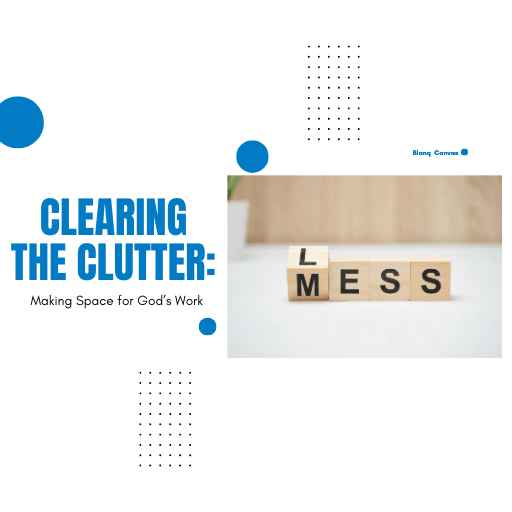
One of my favorite shows to watch is Hoarders, for two reasons: 1) the shock factor—I can’t believe people live like this, and 2) their mess makes my ADHD disorganization look not so bad. Now, I’m by no means at hoarder status. I try to reduce clutter as much as possible because it helps me manage my ADHD, though I can still be unorganized at times.
As I watch the show, I’ve picked up on a common storyline. Regardless of how bad the hoarding is or who the person is, the premise is often the same: the clutter started as something manageable, maybe even enjoyable—a passion, hobby, or collection. But then a life-altering trauma occurred, and this “collecting” became a coping mechanism. Over time, it spiraled out of control, leaving their home uninhabitable, their health deteriorated, and their relationships strained or severed. Isolation becomes their norm, and they accept a lifestyle they never intended to have. Eventually, professional help is brought in to declutter not just their physical space but also their mindset.
This transformation—messy, painful, and raw—is my favorite part of the show. Why? Because it’s a reminder that no matter how cluttered our lives become, with the right help and willingness, change is possible.
What’s Crowding Your Soul?
While I don’t struggle with hoarding physical items, I’ve realized I’ve been prone to hoarding things that clutter my spiritual and emotional life. You might be wondering, how does someone hoard spiritually or emotionally? Let me explain.
We all carry experiences that impact us—positively or negatively—in our emotional, spiritual, and mental spaces. For me, one of the things I hoarded for decades was the belief that I wasn’t “enough.”
This started when I was diagnosed with ADD in the mid-1980s at the age of four. From then on, I began internalizing messages from school, church, and even home that reinforced the idea that I wasn’t smart enough, good enough, or worthy enough. At a prominent Christian school, I spent so much time in the principal’s office that I began to associate my struggles with moral failure. I believed that because I couldn’t meet people’s expectations, I also wasn’t good enough for God.
This belief followed me into adolescence and adulthood. In college, I wasn’t “Black enough” for some, and my clothes weren’t “good enough” for others. I spiraled into depression and unhealthy coping mechanisms, carrying this sense of inadequacy like a weight I couldn’t shake.
Yet it was during these darkest times that I began to experience the grace of God in profound ways. Slowly, I started to hear a different voice—one that told me I was, in fact, enough. But this realization wasn’t without its challenges. At first, I thought being “enough” meant I had to do more for God. It took time to realize that being “enough” wasn’t about performance or perfection. It was about letting go of the lies I’d been hoarding and making room for God’s truth to take root.
Let Go to Make Room
You might be thinking, Whoa, Matt, TMI! I get it. But the reality is, we all hold onto things—hurtful memories, harmful beliefs, or unhealthy patterns—that crowd our souls. These things shape how we view ourselves, the world around us, and even God.
For me, letting go of the belief that I wasn’t enough wasn’t easy. It required prayer, reflection, and a willingness to confront the pain I’d been carrying for years. But as I released those lies, I began to see how God was making space in my life for something new. I found purpose in working with children and youth, both inside and outside the church. These opportunities became sacred spaces where I could rewrite my story—not as someone who wasn’t enough, but as someone chosen and beloved by God.
Making Space for God
Decluttering your soul is no less transformative than decluttering a home. It requires honesty about what’s holding you back and a willingness to let go of the things that no longer serve you. When we clear out the clutter, we make room for God to work in and through us.
So, what’s crowding your soul? What beliefs, habits, or hurts are taking up space that God wants to fill with grace, purpose, and peace? The process may be messy and uncomfortable, but I promise it’s worth it. Let go of the clutter, and make space for God to transform your life.
The result? A life that’s not only livable but abundant—a life where you can experience the fullness of God’s love and share it with others. That’s the power of clearing the clutter.
 Blaq Canvas